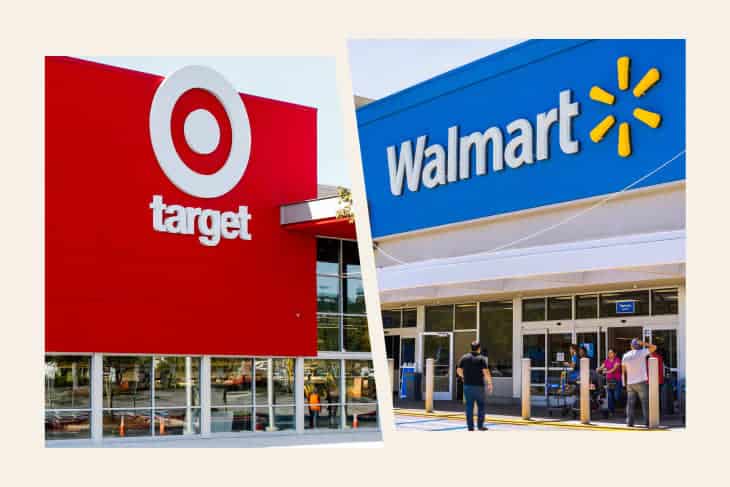

In everyday shopping, two names dominate the conversation in the U.S. Target and Walmart. While both offer low prices and massive selections, they appeal to slightly different customer types. Whether you’re shopping for groceries, home goods, electronics, or fashion, this guide will help you decide which retailer fits your needs in 2026.
Company Overview: Target and Walmart at a Glance
Walmart is the world’s largest retailer, known for its “Always Low Price” promise and a widespread presence in both rural and urban areas.
Target, while smaller in scale, has carved out a loyal customer base with stylish product lines, curated selections, and a more upscale shopping experience.
The 2026 Competitive Landscape: Where Each Retailer Stands
The performance gap between these two retailers has grown sharply heading into 2026. According to Walmart’s Q3 FY26 earnings release, the company posted 4.5% U.S. comparable sales growth and its seventh consecutive quarter of ecommerce growth above 20%, with approximately 35% of store-fulfilled orders delivered in under three hours.
Target’s picture is different. Per Target’s Q3 2025 earnings release, net sales fell 1.5% year over year, and comparable sales declined 2.7%, with store traffic down 2.2%. Incoming CEO Michael Fiddelke, who takes the helm in February 2026, acknowledged the company is focused on “returning to growth as quickly as possible.” The turnaround priorities are merchandising authority, in-store experience, and technology, including a planned integration with OpenAI that will allow customers to shop Target’s catalog directly inside ChatGPT.
Walmart, meanwhile, crossed the $1 trillion market-cap milestone and continues to attract higher-income shoppers alongside its core base.
Target vs Walmart: Side-by-Side Comparison
| Feature | Target | Walmart |
|---|---|---|
| Pricing | Competitive, slightly higher | Often lowest on essentials |
| Store Experience | Clean, modern, stylish | Practical, functional, no-frills |
| Private Brands | Trendy (e.g., Threshold, Cat & Jack) | Value-driven (e.g., Great Value) |
| Online Shopping | Smooth, app-friendly | More product variety online |
| Delivery Options | Same-day via Shipt, Drive Up | Same-day with Walmart+ |
| Loyalty Programs | Target Circle | Walmart Rewards via Capital One |
Pricing: Which One Is Cheaper?
Walmart generally wins on raw pricing, especially for groceries and household essentials. Bulk items, off-brand options, and rollback deals make it hard to beat. Target, on the other hand, focuses on value through design. Prices may be slightly higher, but many shoppers are drawn to the perceived quality and aesthetic appeal.
One Pricing Factor Most Shoppers Overlook
Target price-matches Walmart on identical in-stock items, either at checkout or within 14 days of purchase. Paired with the Target Circle Card’s 5% discount on every purchase, strategic shoppers can often match or beat Walmart on price at Target, particularly in home goods and apparel, where Target’s private-label quality is stronger.
For groceries and household staples, Walmart maintains a consistent edge through its everyday low price model and higher promotional frequency, as reflected in sustained basket-level traffic gains reported in its recent quarterly results.
In-Store Experience: Clean vs Practical
Target stores are often described as bright, clean, and enjoyable to shop in, almost like a mini department store. Product displays are well organized, and Target’s home and fashion sections are particularly praised.
Walmart offers a more utilitarian shopping experience. It’s efficient, straightforward, and sometimes crowded, but many shoppers prefer its simplicity and lower prices.
Private Brands and Quality
Target invests heavily in its exclusive brands, such as:
- Up & Up (household goods)
- Cat & Jack (children’s clothing)
- Hearth & Hand with Magnolia (home décor)
Walmart’s Great Value, Equate, and Mainstays focus on affordability rather than style but often exceed expectations in functionality and pricing.
E-Commerce & Delivery
Both companies offer fast, reliable online shopping.
- Target shines with Drive Up, in-store pickup, and Shipt-powered same-day delivery.
- Walmart has a wider online product catalog, strong Walmart+ offerings, and better grocery availability.
Customer Loyalty & Rewards
Both retailers offer a free loyalty tier and a paid membership. Here is what each delivers.
Target Circle (Free)
- Free to join
- 1% cash back on eligible purchases
- Automatic application of deals at checkout
- Birthday rewards
- Early access to major sale events
Target Circle 360 (Paid)
- $99/year or $10.99/month
- $49/year for Target Circle Card holders
- $4.99/month for students and government assistance recipients
Additional Benefits with Circle 360
- Unlimited same-day delivery on orders over $35 via Shipt
- Free two-day shipping
- 30 extra days for returns
- Monthly free items and exclusive offers
- No-markup same-day delivery from 100+ Shipt partner retailers, including Sephora, CVS, and Petco
Walmart+ Membership
- $98/year or $12.95/month
- Free same-day delivery on orders over $35
- Free shipping with no minimum order value
- 10¢ per gallon fuel discount at 13,000+ participating stations
- Choice of Paramount+ or Peacock streaming subscription
- Mobile Scan & Go for faster in-store checkout
- At-home return pickup
Walmart+ Assist
- Available at 50% reduced pricing
- Same benefits as standard Walmart+
- Eligibility for SNAP, WIC, Medicaid, and other qualifying government assistance programs
Bottom line: Circle 360 wins on breadth of same-day delivery across multiple retail partners. Walmart+ wins on grocery depth, fuel savings, and streaming value. If you already subscribe to Amazon Prime at $139/year, adding a second membership only makes sense if one of these retailers is your clear primary shopping destination
Store Footprint: Who Has Access to What
Walmart operates approximately 4,600 U.S. stores, including over 3,500 supercenters, with strong coverage in rural and small-town markets. According to Walmart’s corporate overview, approximately 270 million customers visit Walmart stores or its ecommerce sites each week across 19 countries.
Target operates just under 2,000 stores, concentrated in suburban and urban markets. For shoppers outside major metros, this comparison is often already settled by geography alone.
In ecommerce, Walmart’s Q3 FY26 results show strong digital momentum, while Target’s Q3 2025 report notes comparable digital sales grew 2.4%, driven by more than 35% growth in same-day delivery through Target Circle 360. Both are investing heavily in fulfillment infrastructure, but from very different starting positions in terms of scale.
Target vs Walmart: Which One Should You Choose?
Choose Target if you want:
- Trendy product design
- A more relaxed, aesthetic shopping experience
- Brand-name and curated style
Choose Target for home decor, children’s clothing, fashion basics, and exclusive private-label lines such as Threshold, Hearth & Hand with Magnolia, and Cat & Jack. Circle 360 makes the most sense if you regularly use same-day delivery across multiple retail categories
Choose Walmart if you want:
- The lowest possible prices
- A huge variety of essentials
- One-stop bulk shopping or grocery savings
Choose Walmart for groceries, pharmacy, bulk household essentials, and automotive. Walmart+ adds genuine fuel savings for frequent drivers and strong grocery delivery coverage.
FAQs – Target vs Walmart
Generally, yes, but not always. Target’s prices reflect design and brand value.
Yes, especially for pantry staples, produce, and bulk items.
Target typically leads here with its exclusive, stylish private-label offerings.
Target is strong for same-day pickup; Walmart has more grocery slots and a wider online inventory.
Yes. Target matches Walmart’s online price on identical in-stock items at the time of purchase or within 14 days. Verification is required through Walmart.com directly.
For most shoppers, the overlap is significant. Walmart+ is worth the $98/year primarily for the fuel discount and grocery delivery. If neither is a regular priority, a second membership adds limited value.
Walmart, clearly. Its rural store coverage is unmatched, and many rural ZIP Codes lack a Target within a reasonable distance.
Yes, for the right shopper. Its private label quality, in-store experience, and Circle 360 delivery network remain genuine strengths. The turnaround under CEO Michael Fiddelke, with $5 billion in planned capital expenditure, is directionally focused on areas where Target has historically been strongest.
» Start Your Free Trial