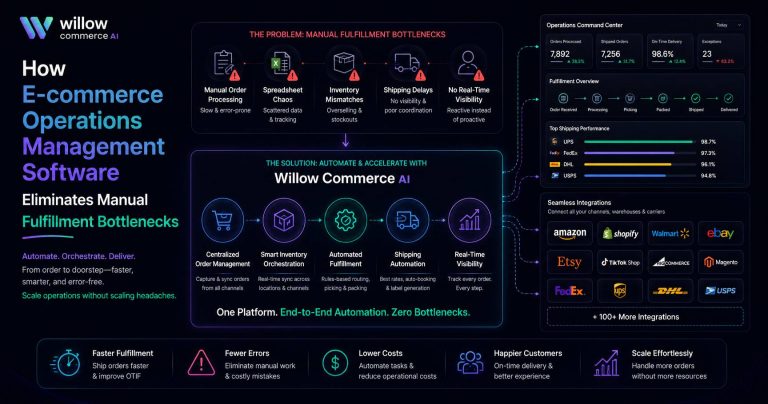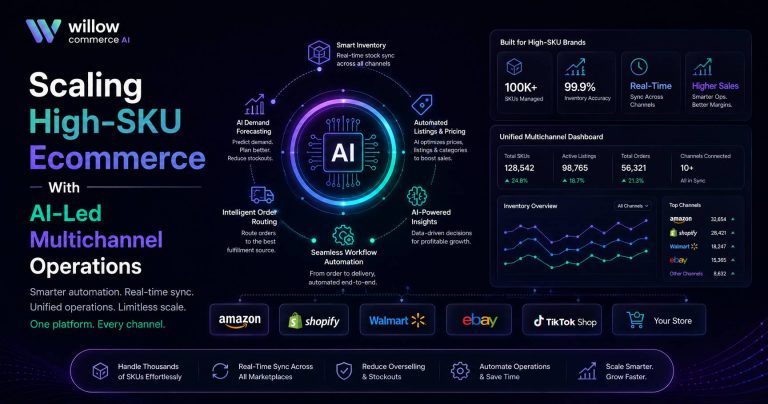


The future of e-commerce is fast, accurate, and automated. In 2026, automation in fulfillment is no longer optional; it’s the backbone of competitive online retail. From AI-driven inventory management to robotic picking and automated shipping labels, automation helps retailers cut costs, reduce errors, and improve delivery speed.
With Willow Commerce Software, sellers can leverage automation across multiple marketplaces and carriers to ensure seamless fulfillment at scale.
Key Areas Where Automation Transforms Fulfillment
1. Automated Order Processing
- Orders from Amazon, Walmart, and Shopify sync automatically.
- No manual entry → fewer errors, faster processing.
- Example: With Amazon Integration, orders move directly into fulfillment workflows.
2. Inventory & Warehouse Automation
- AI predicts demand, preventing stockouts and overstocking.
- Robotics automates picking, packing, and sorting.
- Using Warehouse Management Software ensures stock accuracy across channels.
3. Shipping Label Automation
- Labels are generated instantly, based on carrier rules.
- Integrates with UPS, FedEx, and USPS.
- Shipping Optimization helps reduce costs by comparing real-time carrier rates.
4. Omnichannel Fulfillment
- Automation syncs orders from multiple platforms (Shopify, TikTok Shop, Walmart).
- Customers get consistent experiences across channels.
- Powered by Omnichannel Fulfillment tools.
5. AI-Powered Customer Experience
- Personalized delivery options (same-day, 2-day).
- Automated notifications keep customers updated.
- Improved loyalty through transparent tracking.
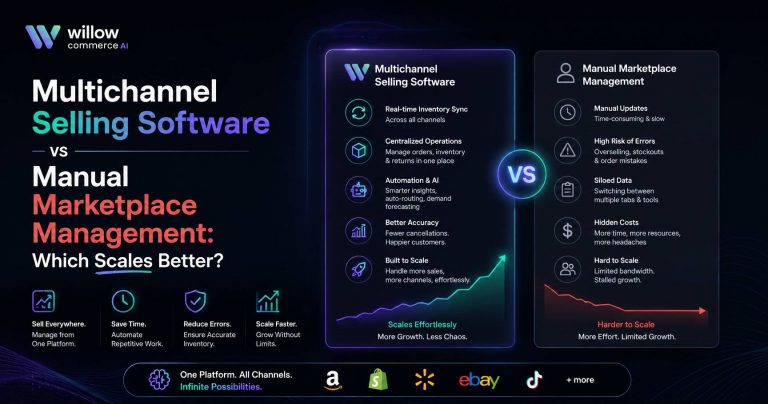
Comparison Table: Manual vs Automated Fulfillment
| Feature | Manual Fulfillment | Automated Fulfillment (2026) |
|---|---|---|
| Order Processing | Prone to delays, human error | Instant sync across marketplaces |
| Inventory Control | Difficult to track accurately | Real-time AI forecasting |
| Shipping Labels | Created one by one manually | Auto-generated, optimized rates |
| Costs | Higher labor costs | Lower costs via efficiency |
| Scalability | Limited to team capacity | Scales effortlessly with demand |
FAQs
It’s the use of AI, robotics, and software integrations to automate order processing, inventory, and shipping.
By cutting labor hours, minimizing errors, and optimizing carrier selection in real time.
Yes—with Willow Commerce, even small sellers can automate order syncing and shipping.
Integrations with Amazon, Shopify, and Walmart connect directly to Willow Commerce for seamless workflows.
Absolutely. Faster shipping, accurate inventory, and transparent tracking boost customer trust and loyalty.
Automation is reshaping e-commerce fulfillment in 2026. Retailers who adopt automated workflows gain a decisive edge with faster deliveries, reduced costs, and improved customer experiences.
With Willow Commerce Software and integrations with Amazon, Shopify, and Walmart, sellers can scale confidently and meet the rising demands of the US e-commerce market.
» Start Your Free Trial