
For US e-commerce sellers, managing multiple marketplaces has become the norm. From Amazon to Shopify, Walmart, and emerging platforms, each marketplace brings unique opportunities but also logistical challenges.
As we move into 2025, marketplace integrations will no longer be a luxury but a necessity for scaling operations. With tools like Willow Commerce Integrations, sellers can connect platforms seamlessly, optimize fulfillment, and improve customer experience.
Why Marketplace Integrations Matter More Than Ever?
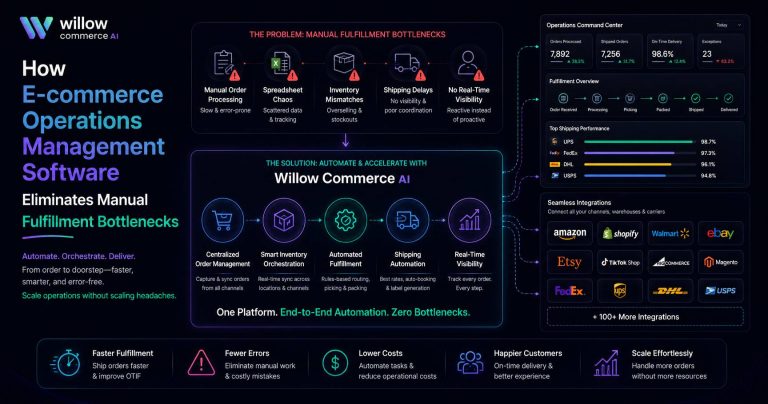
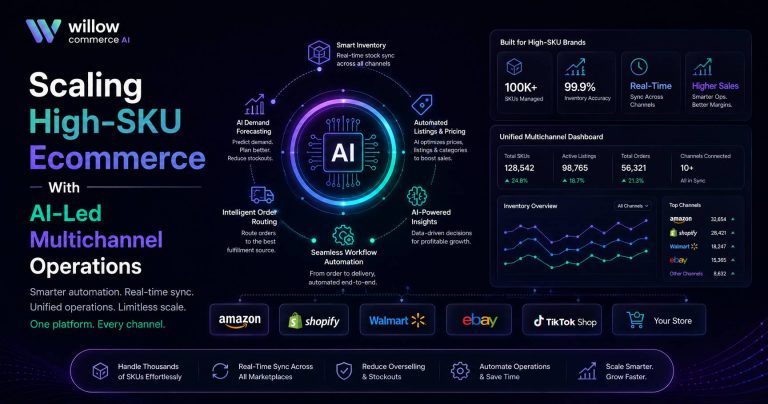
- Centralized Management: No more switching dashboards—products, orders, and shipping can be managed from one place.
- Automation: Labels, pricing, and stock levels update in real time.
- Growth Potential: Multi-channel sales significantly increase visibility and revenue.
Key Trends in Marketplace Integrations for 2025
1. Deeper Amazon Integrations
Amazon remains the largest US marketplace, and integrations now go beyond order syncing. With Amazon Integration, sellers can:
- Automate FBA and FBM workflows
- Access real-time stock and pricing updates
- Ensure compliance with Amazon shipping standards
2. Shopify as the Hub of Social Commerce
Shopify continues to dominate D2C. With Shopify Integration, sellers can connect their stores directly with TikTok Shop, Instagram Shopping, and other social platforms—turning social media into a direct sales channel.
3. Walmart’s Rising Marketplace Power
Walmart is investing heavily in e-commerce. With Walmart Integration, sellers can:
- Sync products instantly
- Optimize delivery with Walmart’s logistics network
- Reach a broad US customer base beyond Amazon
4. Multi-Carrier Shipping Integrations
The future of integrations isn’t just about selling, it’s about fulfillment optimization. With shipping software, sellers can:
- Compare real-time carrier rates (USPS, UPS, FedEx)
- Print labels instantly
- Reduce shipping costs while meeting customer expectations
This ties into Shipping Optimization Software, ensuring smooth post-purchase experiences.
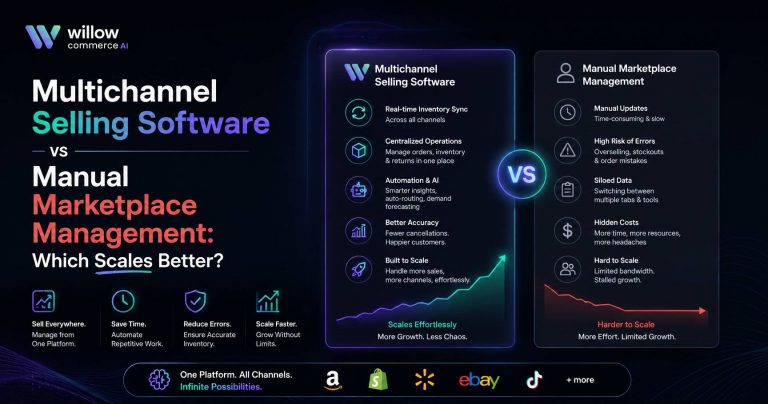
Comparison Table: Traditional vs Integrated E-Commerce
| Feature | Without Integrations | With Marketplace Integrations (2025) |
|---|---|---|
| Order Management | Manual updates across platforms | Automated, centralized system |
| Inventory Sync | Prone to overselling & errors | Real-time, accurate updates |
| Fulfillment | Higher shipping costs, delays | Optimized carrier selection |
| Customer Reach | Limited to one marketplace | Multi-channel (Amazon, Shopify, Walmart, TikTok, etc.) |
| Scalability | Slows down growth | Seamless expansion |
FAQs
Because multi-channel selling is now the standard, and integrations allow sellers to manage operations efficiently.
Amazon, Shopify, and Walmart remain the top three, but TikTok Shop is growing rapidly.
By connecting to real-time carrier rates, integrations reduce expenses and automate label creation.
Yes, tools like Willow Commerce are built to scale with both small and large sellers.
It combines marketplace integrations with shipping optimization, making it a one-stop solution for e-commerce growth.
The future of US e-commerce lies in seamless marketplace integrations. Sellers who adapt early gain a competitive advantage by cutting costs, improving fulfillment, and reaching more customers.
With Willow Commerce Integrations, retailers can connect Amazon, Shopify, Walmart, and beyond ensuring a streamlined, scalable, and profitable future in online retail.
» Start Your Free Trial